
Trego County Criminal Court Files
A criminal court record begins when a prosecutor files charges in court. In Trego County, criminal case files are maintained by the Clerk of the District Court as part of the Kansas District Court system. The file can include the complaint or information, charging law, bond orders, arraignment, pleas, motions, hearing notices, docket entries, disposition, sentence, costs, fines, restitution, probation conditions, and warrants tied to the case. A jail booking record may exist before or beside the court file, but it is not the same record.
Trego County District Court is the primary local trial court for both felony and misdemeanor criminal cases filed in the county. The district also lists a district magistrate judge role. City-level municipal court matters can be separate when a city ordinance or city traffic citation names a municipal court. For charge details immediately after arrest, the Trego County court charge records page focuses on the arrest-to-charges path. The criminal court record focuses on the filed case and its outcome.
Search Trego County Criminal Court Records
The main public search path is Kansas CaseSearch. It covers public district court case information available under Kansas law. Search by defendant name when no case number is known. Search by case number when a bond paper, notice, docket listing, attorney filing, or court letter provides one. Narrow the search to Trego County or Kansas District Court if the portal offers that filter.
- Open Kansas CaseSearch or use the 23rd Judicial District record-search page as the starting point.
- Enter the defendant name or the criminal case number from a court notice, citation, or docket entry.
- Limit by Trego County, court, case type, or date range when the search screen offers those controls.
- Open the public case result and read the docket entries, charge status, hearings, plea, disposition, and sentencing fields when shown.
- Contact the Clerk of the District Court for certified copies, missing documents, older files, restricted items, or courthouse terminal access.
The Kansas criminal history record search is a separate statewide background-record channel that requires KanAccess or subscriber login. It is not the same as a Trego County court case file. A criminal history search may summarize history across jurisdictions, while the court file shows the actual district court case events and documents.
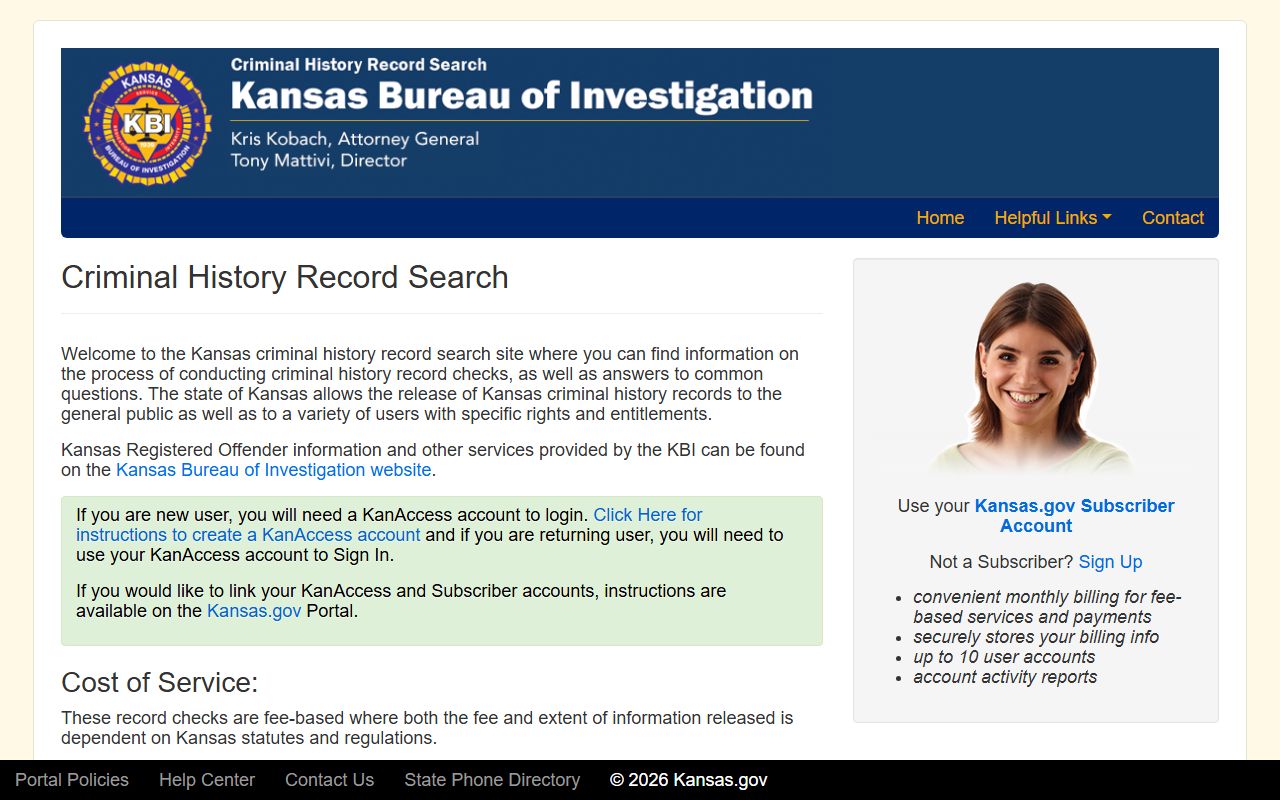
Statewide criminal history tools can supplement a court search, but the filed Trego County case record remains with the district court.
Trego County Criminal Case Flow
A criminal case moves through stages, and each stage may create a docket entry or document in the court file. The exact path can vary. Some cases end by dismissal, diversion, plea, bench trial, jury trial, or sentencing. Others may involve a warrant, bond order, continuance, probation violation, or post-judgment motion. The important record point is that the docket tracks events while the case file holds the public documents and orders that the court accepts.
Case flow: Charges Filed › Arraignment › Pretrial / Motions › Plea or Trial › Disposition › Sentencing
| Stage | What Happens |
|---|---|
| Charges Filed | The County Attorney files or declines formal charges after screening the law enforcement matter. |
| Arraignment | The defendant is advised of the charge and enters a plea such as guilty or not guilty. |
| Pretrial / Motions | Attorneys may file requests about evidence, bond, procedure, discovery, or scheduling. |
| Plea or Trial | The case may resolve by plea, bench trial, jury trial, dismissal, or other court ruling. |
| Disposition | The court records the current or final outcome of the charge or case. |
| Sentencing | After conviction, the court may enter jail, prison, probation, costs, fines, restitution, or other terms. |
Trego County Criminal Record Fields
A criminal court record can be read field by field. Some public results show only a summary, while the clerk's case file may hold more docket entries and public documents. Sealed, expunged, juvenile, and confidential items may be hidden or redacted. The field table below reflects the Trego County research inventory for criminal case files maintained by the district court.
| Field | What It Shows |
|---|---|
| Case Number | The Kansas district court number assigned to the criminal case. |
| Defendant | The person charged, with public identifying details only when disclosure is allowed. |
| Court | Trego County District Court in the 23rd Judicial District. |
| Charges | The formal offense allegations filed by the prosecutor, including amendments when recorded. |
| Bond | Money or conditions used to secure appearance, if bond information is public. |
| Plea | The defendant's answer to a charge, such as guilty or not guilty. |
| Motions | Written requests asking the judge to rule on evidence, procedure, bond, or other issues. |
| Disposition | The current or final outcome, such as conviction, dismissal, acquittal, or other resolution. |
| Sentence | Court-ordered consequences after conviction, such as probation, confinement, costs, fines, or restitution. |
| Warrants | Bench warrants, arrest warrants, or warrant status when tied to the court case and public. |
Trego County Charges and Convictions
A charge is an allegation. A conviction is a result after a plea or finding of guilt. A Trego County criminal court record may show charges that were amended, reduced, dismissed, or resolved without conviction. Reading only the first charge line can give the wrong picture. The docket and disposition fields must be read together.
| Charge | Conviction | |
|---|---|---|
| Meaning | Formal accusation filed or pending in court | Guilt established by plea, court finding, or verdict |
| Timing | Appears early in the case after filing | Appears after plea, trial, or other final action |
| Record Risk | May later be dismissed, reduced, or amended | Can lead to sentence, probation, costs, and collateral effects |
| Where to Verify | Complaint, information, docket entries, and amended filings | Disposition, judgment, sentencing order, and payment entries |
Trego County Criminal Prosecution
The Trego County Attorney is the local prosecution office. The county department directory says the office is primarily responsible for prosecution of all cases for Trego County. The office is at 216 North Main Street, WaKeeney, KS 67672. The phone number is 785-743-5458, the fax is 785-743-5388, and the email is countyattorney@tregocountyks.gov. The listed contact is Abraham Pfannenstiel, with Cheryl Augustine listed as legal assistant in the department directory.
The prosecutor's role helps explain the difference between arrest records and criminal court records. Law enforcement may make an arrest and create booking or custody information. The County Attorney screens the matter and files or declines formal charges. The district court record then shows the filed criminal case, hearings, pleas, dismissal, conviction, sentence, costs, and other case activity. The clerk, not the prosecutor, is the case-file custodian for public court copies.
The KBI registered offender registry is a separate public source for qualifying sex, violent, and drug offender registration information.
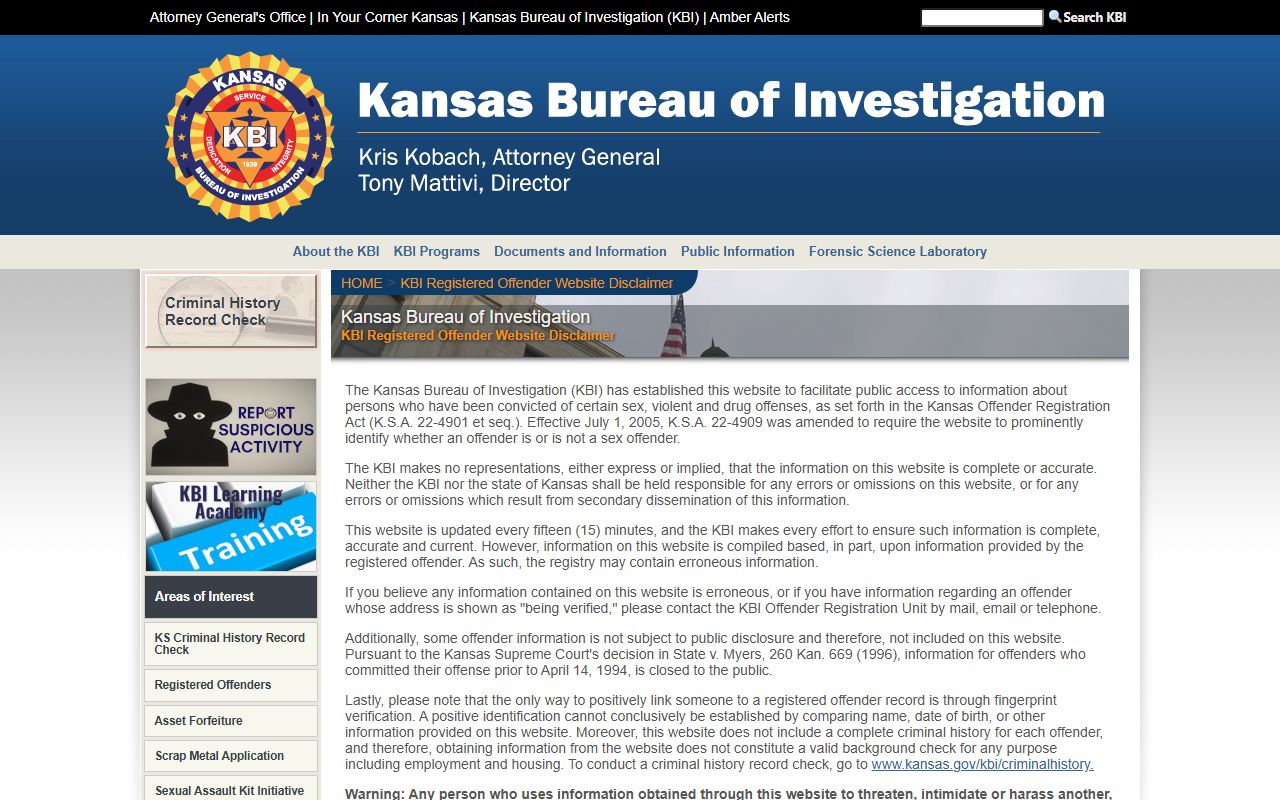
The KBI registered offender registry is another statewide public resource, but it is separate from the district court file and applies only to qualifying registration records.
Trego County Sealed or Expunged Records
Restricted criminal records can be sealed, expunged, confidential by law, or redacted. Juvenile matters are not ordinary public records. Some warrant-seeking cases may be sealed while an arrest warrant is sought until execution or denial. Personal identifiers, protected victim locations, minor information, health facts, and other sensitive data can also be withheld. A public search result may therefore be less complete than the underlying court file.
| Sealed | Expunged | |
|---|---|---|
| Public Visibility | Hidden from ordinary public access by law or court order | Public disclosure is limited after the court grants statutory relief |
| Common Trigger | Confidential case type, sealed warrant request, court order, or protected information | Petition under Kansas expungement law after eligibility requirements are met |
| Internal Access | May remain available to courts or agencies with authority | May remain available to specific agencies as allowed by statute or order |
| Public Request Result | Clerk may deny, redact, or require a court order | Custodians respond according to the expungement order and statute |
K.S.A. 22-2410 covers expungement of qualifying Kansas arrest records. K.S.A. 38-2312 governs juvenile expungement and includes statutory requirements and exclusions. If relief is granted, certified copies of the order are sent to agencies with records.
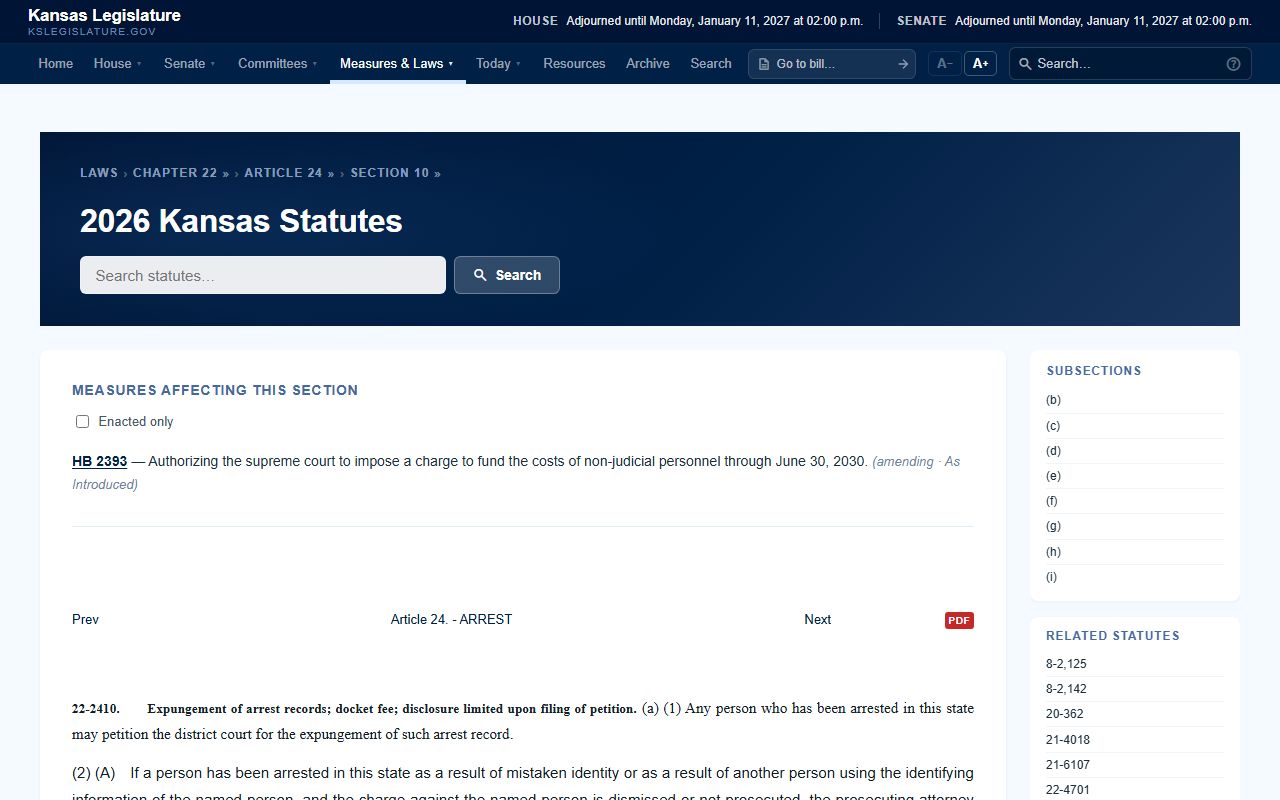
The arrest expungement statute matters to criminal court records because relief can affect what the public sees after a qualifying case or arrest record is addressed by court order.
Trego County Criminal Access Limits
Kansas public-record principles appear in K.S.A. 45-215 through 45-223, but criminal court access also depends on court rules, case type, sealing orders, expungement statutes, and confidentiality limits. Public CaseSearch information is for general reference and does not serve as a certified copy. The courthouse terminal and Clerk of the District Court remain important when a public user needs a record that is not online, a certified copy, or clarification of a docket entry.
For a defendant who cannot afford counsel, Kansas indigent defense is handled through the Kansas State Board of Indigents' Defense Services. The research did not locate a Trego County-specific public defender office. The practical route is to request appointed counsel in the Trego County District Court case. The court determines eligibility and appointment. Records about appointment can appear in the case file, but attorney-client communications and protected defense materials are not public court records.
The Kansas Department of Corrections is the statewide custody source after a case results in state-prison supervision or custody.

Kansas Department of Corrections information can be relevant after sentencing to state custody, but it is not the same as the district court criminal case file.
Note: Use the clerk for court copies and use the jail, DOC, or KBI only for the separate records those agencies maintain.
Trego County Offender Record Boundaries
Some criminal matters have records outside the court file. K.S.A. 22-4909 addresses public access to Kansas offender registration information through registering agencies and KBI internet resources. Registration information can be public even though it is not the same as the criminal case docket or sentencing order. The court record may show the conviction and sentence that led to later registration duties, while the registry shows registration status and public registry facts.
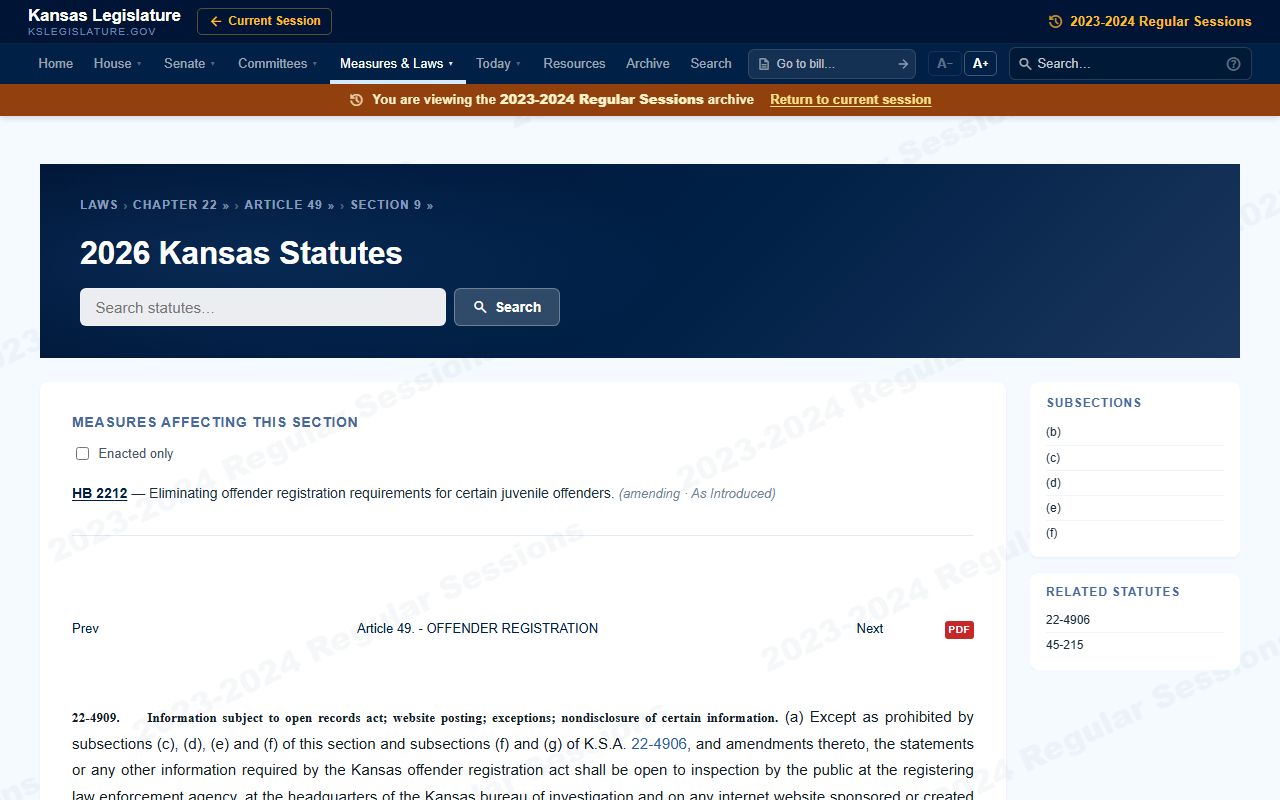
The offender registration statute is useful for understanding why a person may appear in a registry even when the court case file must still be checked for the actual conviction and sentence.